Water Main Breaks & Backsiphonage: How Pressure Drops Trigger Boil Water Advisories in Ontario
Published on October 28, 2026 | 1,400 Words | Updated November 21, 2026 | By Backflow Compliance Technical Team
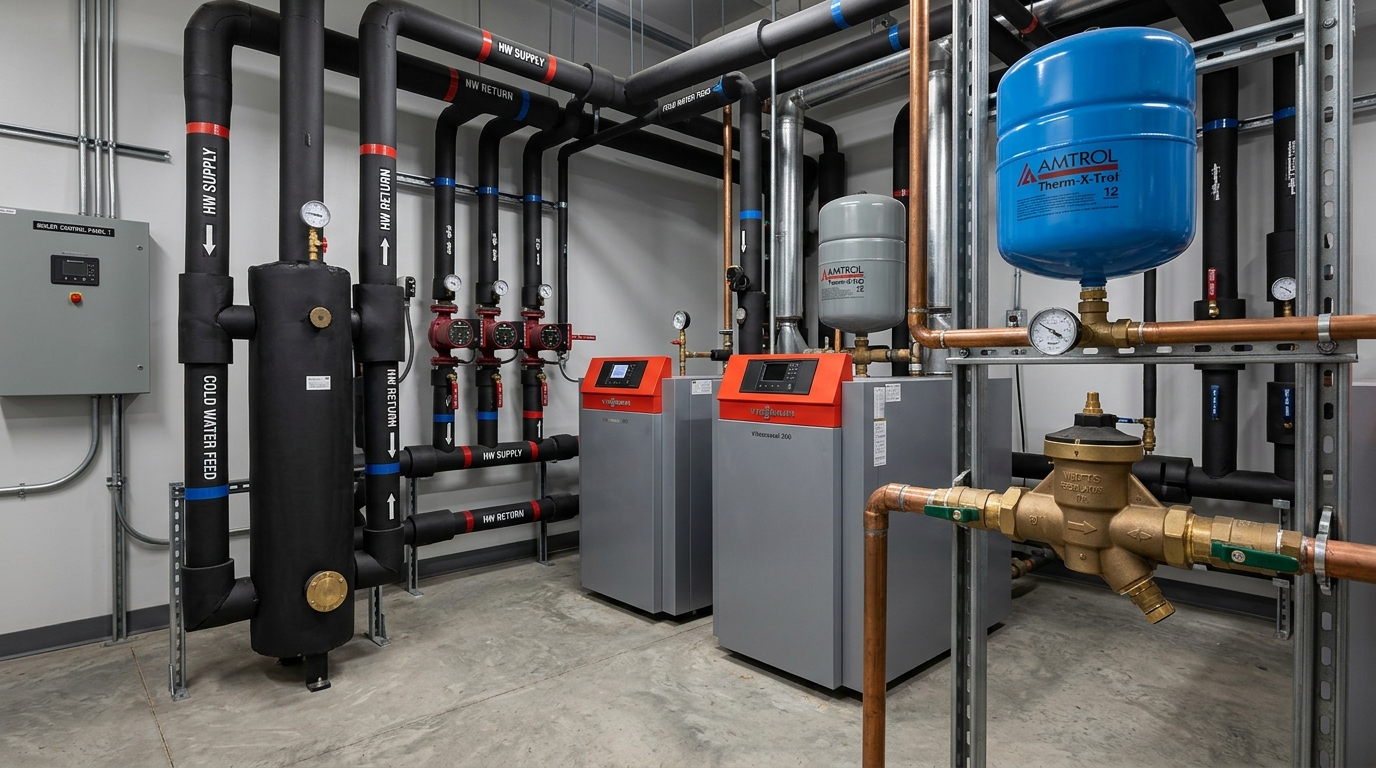
When a municipal water main break drops street distribution pressure below 20 PSI, negative vacuum pressure creates backsiphonage—pulling non-potable water from unprotected boilers, cooling towers, and chemical dispensers backward into public drinking water mains and triggering Ontario Boil Water Advisories.
Every winter and spring across Ontario, deep frost heaves and aging subterranean cast-iron distribution pipes cause hundreds of sudden municipal water main breaks. When a 12-inch or 24-inch trunk main shears open beneath an arterial road, thousands of litres per minute escape into excavations and storm sewers. Beyond flooded basements and traffic closures, pressure collapse triggers a critical public-health risk inside surrounding commercial buildings: backsiphonage.
1. The Physics of Backsiphonage: Why Negative Pressure Pulls Water Backward
Municipal water systems across Toronto, Mississauga, Brampton, Hamilton, and London are engineered around one core safeguard: continuous positive pressure. Under steady conditions, street mains operate between 50 and 85 PSI, pushing clean treated water forward through commercial meters and riser manifolds.
The moment a water main ruptures down the block—or multiple municipal pumper trucks open street hydrants simultaneously to battle a warehouse fire—the velocity surge drops upstream main pressure to zero and rapidly creates a sub-atmospheric vacuum in elevated piping zones. Just like sucking on a drinking straw, that negative vacuum reverses hydraulic flow, pulling stagnant process water, chemical solutions, and submerged basin water out of private buildings backward into the city main.
2. Contamination Mechanisms Compared: Biological vs. Chemical Risk
Understanding why municipal water purveyors treat backsiphonage and back-pressure differently helps commercial facility managers select CSA B64.10 compliant protection:
| Backflow Mechanism | Hydraulic Trigger | Common Commercial Sources | Does Boiling Water Fix It? |
|---|---|---|---|
| Backsiphonage (Negative Vacuum) | Water main break, hydrant flushing, sudden supply shut-down below 20 PSI | Janitorial mop hoses submerged in sanitizer buckets, irrigation sprinklers, dental vacuum lines | Partial Only: Neutralizes bacteria/pathogens, but fails completely on soaps or chemicals. |
| Back-Pressure (Over-Pressurization) | Building pump, boiler, or thermal pressure exceeds incoming street PSI | Glycol heating loops, high-rise booster pumps, car wash pumps, elevated chillers | No — Boiling concentrates glycol, nitrites, and toxic inhibitors. |
| Subsoil Main Intrusion | Unpressurized street main repair cavity under water table | Stormwater runoff, sanitary exfiltration, trench groundwater near cracked cast iron | Yes for biological pathogens — Standard reason MECP issues precautionary Boil Water Advisories. |
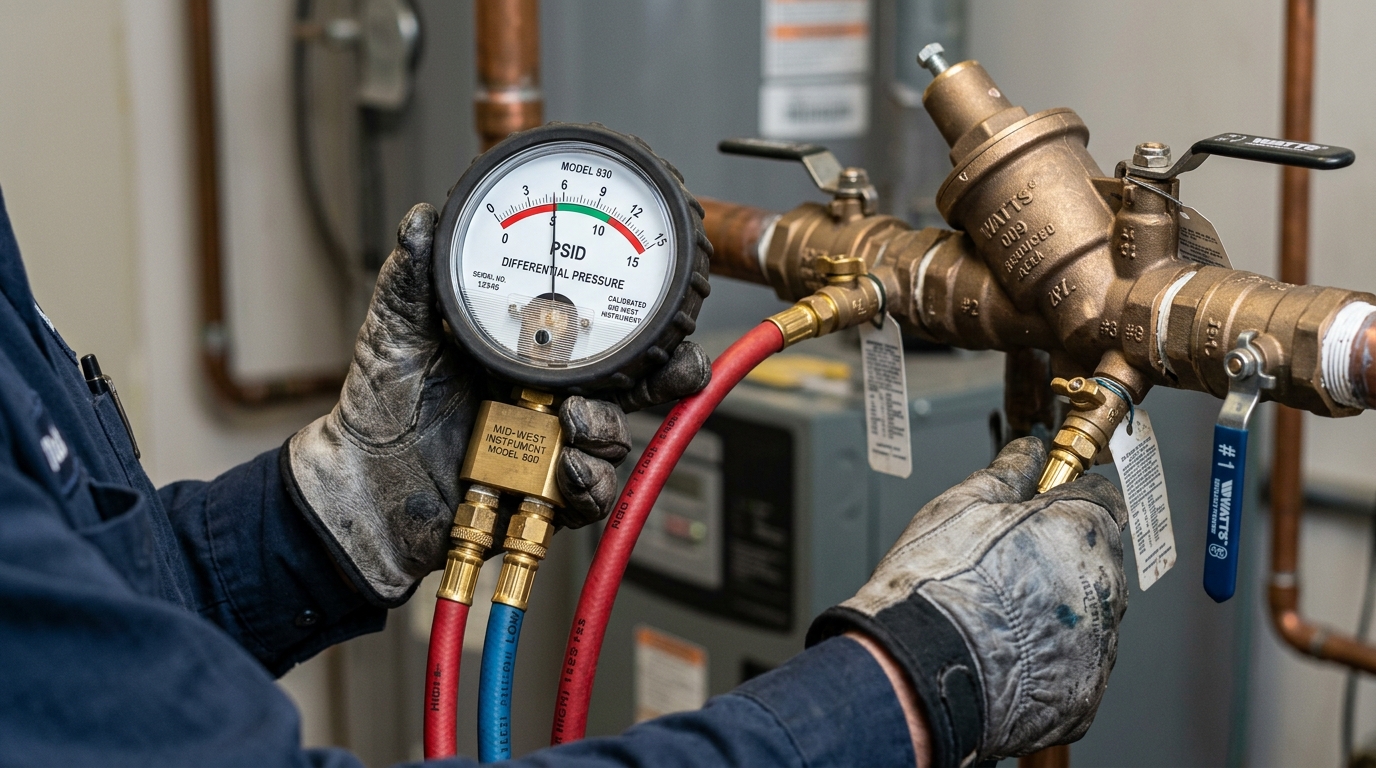
3. Premise Isolation: How One Tested Assembly Shields Your Liability
Even if a facility has dozens of tenants or complex mechanical equipment on upper floors, Ontario municipal cross-connection bylaws rely on Premise Isolation right inside the incoming water meter room. A properly sized DCVA or RPZ assembly installed downstream of the city meter forms a mechanical one-way boundary before any branch tee leaves for boilers, commercial kitchens, or cooling towers.
If an excavator strikes a water main outside in Mississauga, Brampton, or Vaughan and street pressure collapses below zero, the spring-loaded internal check discs inside your premise isolation assembly slam shut immediately under reverse delta-P—physically preventing building water from draining backward into the neighborhood main.
4. Four Internal Cross-Connections Overlooked During Facility Audits
When we conduct 5-Year Cross-Connection Control Surveys across GTA commercial towers and industrial plants, municipal inspectors repeatedly flag the exact same internal risk points:
- HVAC Heating Boilers & Chilled Loops: Direct municipal make-up auto-fill piping without a severe-hazard RPZ assembly allows inhibited glycol, nitrites, and molybdate boiler treatment to siphon backward whenever street pressure dips.
- Commercial Kitchens & Coffee Bars: Post-mix beverage carbonators, commercial dishwashers, and chemical sanitizer proportioners require point-of-use vented dual checks or vacuum breakers so copper piping never leaches carbonic acid.
- Custodial Mop Sinks & Exterior Hose Bibbs: Leaving a chemical hose submerged inside a mop pail creates a direct Class 4 submerged cross-connection. Locking hose bibb vacuum breakers (ASSE 1011 / CSA B64.2) eliminate this hazard for pennies per fixture.
- Thermal Expansion & Aged Rubber Discs: Once premise isolation creates a closed plumbing loop, trapped heating expansion spikes static water pressure upward. Installing an expansion tank prevents premature relief valve weeping and rubber check fatigue.
5. Why Annual Testing Matters After Main Repairs
Following any neighborhood water main break, municipal restoration crews flush massive volumes of turbid sediment, rust flakes, and sand down the street main. As buildings recharge their domestic headers, that debris lodges directly onto Check #1 elastomer seats inside RPZ and DCVA assemblies—causing continuous relief valve dripping and failed differential readings. Scheduling an annual test or post-repair check inspection ensures your internal springs seat cleanly before the next pressure emergency hits.
Frequently Asked Questions
1. Why is 20 PSI the regulatory threshold for Ontario Boil Water Advisories?
Under Ontario's Safe Drinking Water Act and MECP operating standards, municipal water mains must maintain positive pressure above 20 PSI (140 kPa) at all times. Dropping below 20 PSI compromises the outward hydraulic barrier against groundwater infiltration and creates localized backsiphonage across unisolated commercial service connections.
2. Does boiling water make water safe after a commercial chemical backflow incident?
No. Boiling tap water for 1 to 2 minutes neutralizes biological pathogens (bacteria, viruses, protozoa), but it does not eliminate dissolved industrial chemicals, propylene glycol, heavy metals, or boiler corrosion inhibitors. In fact, boiling can concentrate non-volatile chemical toxins.
3. Who is legally responsible if my building contaminates the city water main during a main break?
Under municipal bylaws including Toronto Chapter 851, Peel By-law 10-2017, and York By-law 2021-44, the commercial or multi-residential property owner is legally responsible for maintaining working Premise Isolation backflow prevention at the water meter. Operating without a tested assembly exposes owners to $10,000-$50,000+ fines and civil liability.
4. Do commercial properties also need thermal expansion protection alongside a premise backflow preventer?
Yes. Because a DCVA or RPZ check valve blocks reverse flow toward the street main, expanding hot water inside commercial heaters and boilers can cause pressure relief valves to drip or rupture fittings unless a properly pressurized potable thermal expansion tank is installed downstream.
Ensure Your Premise Isolation Valve Holds Under Negative Pressure
Book OWWA-certified annual testing or a 5-year Cross-Connection Survey across Toronto, Peel, York, Halton, Waterloo, Barrie, and Hamilton.